Newly discovered intergalactic void repels Milky Way
By identifying the Dipole Repeller, researchers are able to explain both the direction of the Milky Way’s motion and its velocity relative to the rest of the Universe.


By identifying the Dipole Repeller, researchers are able to explain both the direction of the Milky Way’s motion and its velocity relative to the rest of the Universe.

Nick Kaiser is being honored for his extensive theoretical and observational work on cosmology, including how matter—both dark and visible—is distributed on the largest scales.
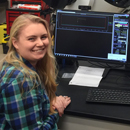
Astronomer Pierre Martin and student Callie Crowder?have assembled and calibrated the telescope’s various components, including the computers, dome and instruments.
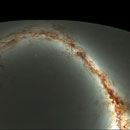
The surveys allow access to millions of images and data on billions of stars and galaxies.
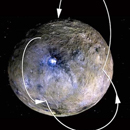
Newly published studies from Dawn scientists show two distinct lines of evidence for ice at or near the surface of Ceres.

Astronomers from the 糖心视频 Institute for Astronomy, Brazil and Stanford University describe the physical mechanism responsible for slowing the Sun’s outer layers.
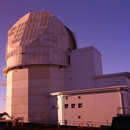
The Hawaiʻi Supreme Court affirmed the Conservation District Use Permit for the construction of the telescope.

Nader Haghighipour will discuss NASA’s Kepler mission and the discovery of new planetary candidates on September 22 at Windward CC.

R. Brent Tully, considered the father of modern observational cosmology, received the ARCS Foundation Honolulu Chapter’s 2016 Scientist of the Year award.

A research group including IfA’s Nader Haghighipour used data from NASA’s Kepler to identify planets that could support life.