New ocean acidification monitoring station in American Samoa
The buoy will measure carbon dioxide and other important seawater characteristics within American Samoa Fagatele Bay’s vibrant tropical coral reef ecosystem.


The buoy will measure carbon dioxide and other important seawater characteristics within American Samoa Fagatele Bay’s vibrant tropical coral reef ecosystem.

The Pacific Islands Ocean Observing System redeployed its wave buoy outside of Tanapag, Saipan, more than seven months after it broke free from its mooring during Super Typhoon Yutu in October 2018.
After a Pacific Island Ocean Observing System buoy had drifted 920 statute miles offshore, the U.S. Coast Guard made a recovery rescue and brought it safely back to Guam.

Atmospheric and wave forecasts will improve public safety for the people of Guam, Commonwealth of the Northern Mariana Islands and American Samoa.

The buoy west of Kalaeloa Harbor on Oʻahu's leeward side provides real-time information on wave height, wave direction wave period and sea surface temperature.
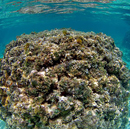
The study synthesized 10 years of datasets for the first time to get a big-picture perspective on Hawaiʻi's reef health and regional impacts and it provides a foundation for further research and informs policies to protect coral reefs.

Currents data, along with wave information, will help to enhance marine safety, navigation and harbor operations on 翱ʻ补丑耻’蝉 south shore.
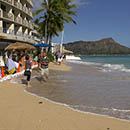
The public has the opportunity to get involved documenting high water levels and related impacts through the King Tides “citizen science” project.

The upcoming peak astronomic tides of the year, known as “king tides,” will occur around May 26, June 23 and July 21.

Researchers at the Hawaiʻi Institute of Marine Biology and Department of Oceanography have been awarded over $1 million to test and evaluate technology used to observe aquatic ecosystems.